Share This Article
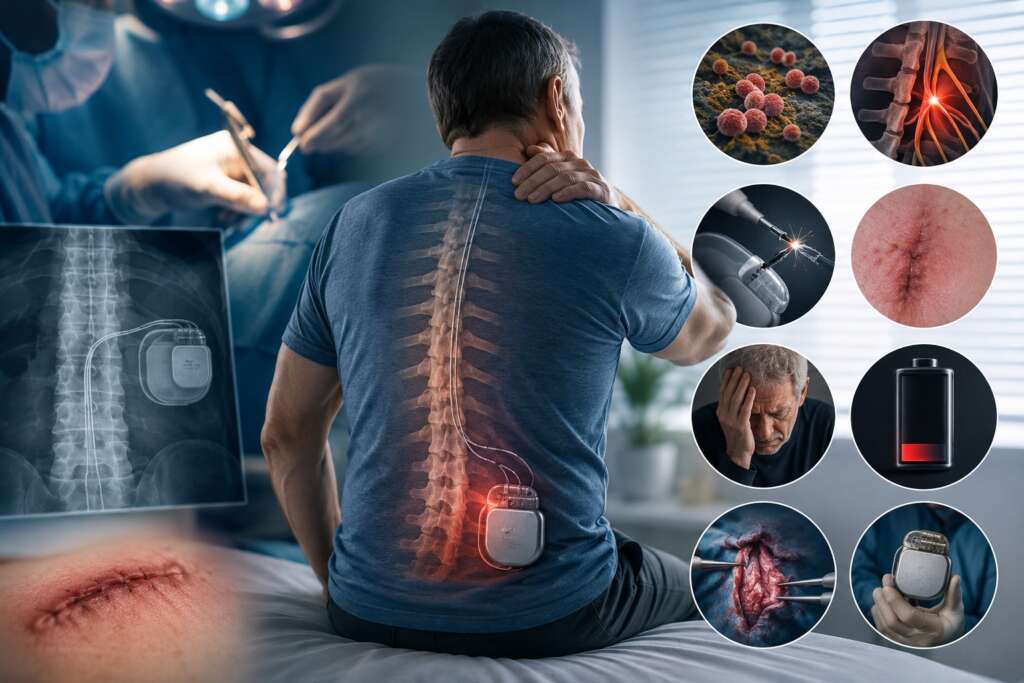
The pain management clinic has a brochure with a hiker on it. Grinning. Living the life that chronic pain has stolen from them. They are told that the device will interrupt pain signals before they reach the brain. It will cut down their opioid use. It will take them back to their life. What the brochure doesn’t tell you is the patient six months down the line with lead migration, nerve damage, or a surgical wound that won’t heal. Or the one who had the implantation surgery only to find the device doesn’t work for them and now faces another surgery to remove it.
Some patients have experienced relief from pain management devices that are implanted, especially spinal cord stimulators. That’s real. But the complications are real, and the informed consent process doesn’t always make that clear enough for the patient to weigh the real risk. When those risks do occur, some patients file a spinal cord stimulator lawsuit to hold manufacturers accountable for devices that did more harm than good. These are some of the risks that every patient should know about before agreeing to implantation.
Table of Contents
How Implantable Pain Management Technology Works
Pain management devices, like spinal cord stimulators, that are implantable typically involve multiple technological components functioning together. Leads are placed close to the nerves, and a small pulse generator provides regulated electrical stimulation. The system can be programmed to deliver specific stimulation patterns based on the patient’s condition and response to treatment.
That means the technology itself is just part of the equation. The location of the hardware, the integrity of the electronic components, the programming of the stimulation parameters, and the body’s response to the implanted materials can all affect how well the device provides meaningful relief from pain.
Some patients have been helped by implantable pain management devices, especially spinal cord stimulators. That’s real. But the complications are real, and the informed consent process doesn’t always make that clear enough for the patient to weigh the real risk. When those risks do occur, some patients file a spinal cord stimulator lawsuit to hold manufacturers accountable for devices that did more harm than good. These are some of the risks that every patient should know about before agreeing to implantation.
1. Infection of the Surgical Site
Any time you cut the skin there is a risk of infection. Implantable devices are foreign objects that are placed in the body and are a continuous infection surface. Surgical site infections can occur days or weeks after the procedure. A few can be treated by antibiotics. Others require the device to be completely removed, meaning another surgery before the infection site is fully healed.
2. Nerve Damage at Implantation
The procedure consists of placing leads near the spinal cord. Accuracy is important. If a lead is misplaced, tissue is damaged during insertion, or the surgical approach irritates nearby nerves, the result can be new neurological symptoms that didn’t exist before the device was implanted. Numbness, tingling, weakness, or pain in areas other than what the device was targeting.
3. Hardware Failures
They are electronic devices implanted in the human body. Batteries run out. Circuits fail. Connections are severed. When the hardware breaks, the pain relief stops and the patient needs replacement surgery.
The effectiveness of the technology also depends on the hardware. The pulse generator must always produce the intended stimulation, and the leads and their connections must stay functional and well placed. Some devices last five to ten years on a single battery charge, meaning that even if the device is functioning properly, it will eventually have to be replaced through surgery.
4. Chronic Pain at the Site of Implant
The operation itself causes a wound. In some patients, that wound site becomes a source of chronic pain that lingers long after healing should have been complete. The device was designed to relieve pain. Instead, it created a new source of pain for the patient to deal with in addition to the original condition.
5. Post-Implantation Device Recall
Medical device recalls do happen. When a spinal cord stimulator or pain pump is recalled after thousands of units have already been implanted, patients are faced with a decision no one should have to make. A device can be recalled and you can live with it in your body, or you can have surgery to remove it, which might fail or might not. FDA recall data shows that these devices have had multiple recalls over the last 10 years.
6. Poor Pain Management
The trial before permanent implantation is supposed to predict if the device will work. It doesn’t always. In some patients, relief is adequate during the trial but diminishes after permanent placement.
The technology is highly dependent on stimulation parameters and how they interact with a patient’s specific condition. What works in the beginning may need to be altered over time, and the patient’s condition or response may change, affecting the results. The stimulation pattern that worked at first may become ineffective over time, and the patient is left with a device that no longer does what it was put there to do.
7. Scar Tissue Formation Around Electrodes
The body sees the implanted leads as foreign objects. As a result, scar tissue can form around them. That tissue can insulate the leads from the nerves they’re trying to target, reducing the effectiveness of the stimulation. It can also make the removal of leads in the future much more complicated and dangerous.
8. Complications of Device Removal
Removal of an implanted device is not simply the implantation procedure in reverse. Scar tissue grows around the leads. The hardware might have moved. Some of the nerves that were not near the leads at the time of implantation may have grown around the leads. Surgery carries its own risks, such as nerve damage, infection, and spinal fluid leak.
9. Inadequate Long-Term Safety Data of Newer Devices
Device makers bring new models to market through FDA pathways that don’t always require long-term clinical trials. The 510(k) clearance process allows devices to reach patients on the basis of similarity to existing products, not independent demonstration of safety over years of use.
This is particularly difficult when considering fast-developing medical technology. Newer devices may have different hardware configurations, stimulation capabilities, software, or programming approaches, and it may take years to collect long-term real-world data. The patients become the long-term study. The data on how a device works at year eight or year twelve is often not available at the time of implantation because nobody’s had it that long yet.
Implantable Pain Management Technology: The Future
As implantable pain management technology evolves, manufacturers are working toward systems that can deliver more personalized stimulation and greater control over how devices respond to individual patients. Future systems may become more adaptable, thanks to advances in device programming, smaller hardware, battery technology, and more sophisticated stimulation approaches.
But the basic problems of implantation are not solved by advances in technology. Any system inside the body still has to deal with hardware reliability, biological reactions, lead positioning, battery life, software and programming limitations, and the possibility that the technology might not deliver the expected level of relief.
The Decision Needs Better Data
Implantable pain management devices are not inherently dangerous. They have been a real help for patients who have run out of other choices. But the discussion between the doctor and the patient before implantation should include all the items on this list, not just the success stories in the brochure.
Understanding the technology is part of that conversation. Patients should be made aware of what specific parts are being implanted, device programming, the device hardware longevity, potential reasons for system failure, and what to expect if the device needs reprogramming, replacement, or explantation.
Informed consent is not only about what can go right, but what can go wrong. And when a device does harm, whether it be due to defective design, manufacturing failure, or inadequate warnings, patients have a right to seek accountability from the companies that profited from that device being put inside their body.

Prashant Sharma
Prashant Sharma is a Delhi based Entrepreneur who spent most of his college days polishing his marketing skills and went for his first business venture at 19. Having tasted failure in his entrepreneurial debut, he turned a Tech-enthusiast, specializing in web technologies later. Join him on Google Plus