Share This Article
Generated using OpenAI
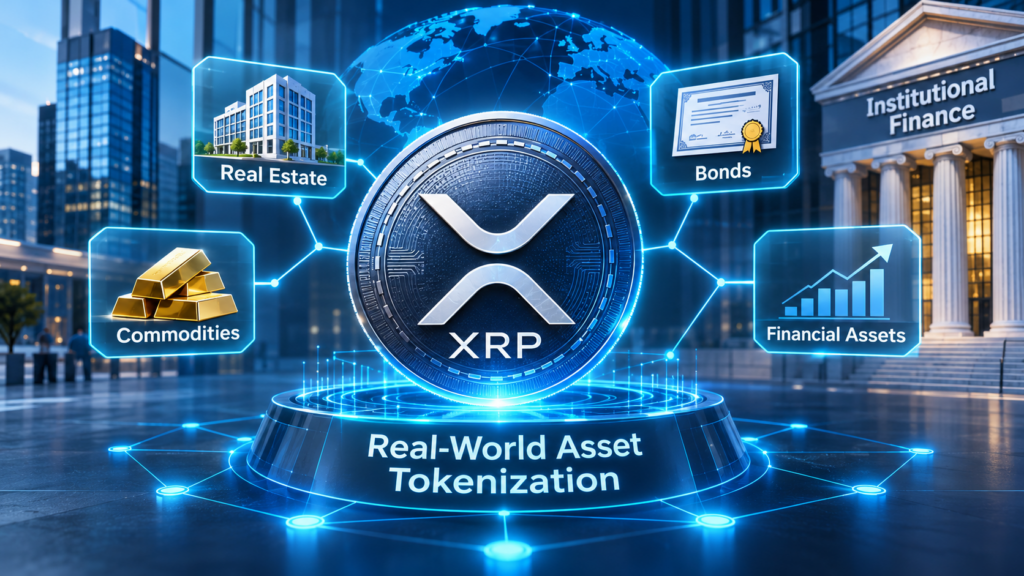
The growing interest in real-world asset (RWA) tokenization is creating new opportunities for blockchain technology to interact with traditional financial systems. From real estate and government bonds to commodities and financial instruments, businesses are exploring ways to represent conventional assets as digital tokens.
Recent discussions among financial regulators have also highlighted how tokenization could improve efficiency across global financial markets.
This shift could reshape how assets are issued, transferred, and managed. Among the blockchain networks attracting attention in this space is the XRP Ledger (XRPL), which was originally designed to support fast and cost-efficient value transfers.
While cryptocurrency markets frequently focus on price movements and regulatory developments, the broader conversation around blockchain adoption increasingly involves infrastructure, interoperability, and institutional use cases. Understanding how XRP fits into this development requires looking beyond market speculation and examining the technology behind real-world tokenization.
Table of Contents
Understanding Real-World Asset Tokenization
Real-world asset tokenization involves representing ownership rights or financial interests in traditional assets through digital tokens recorded on a blockchain.
These assets can include real estate and property investments, government and corporate bonds, commodities such as gold, private credit and financial instruments, and money market funds.
Tokenization can introduce several operational improvements. Traditional asset transfers often involve multiple intermediaries, extensive documentation, and settlement processes that may take several business days. Blockchain-based systems can potentially simplify these processes through programmable transactions, transparent ownership records, and automated settlement mechanisms.
However, tokenization requires more than simply creating digital representations of assets. Legal ownership structures, regulatory compliance, custody arrangements, and reliable valuation systems remain essential components of any successful implementation.
XRP Ledger’s Role in Blockchain Settlement
The XRP Ledger is a decentralized blockchain designed to facilitate payments and transfers of value. Its transaction architecture supports relatively fast settlement and low transaction costs compared with many traditional payment systems.
These characteristics have made the network relevant to discussions around cross-border payments and financial infrastructure. In a tokenized financial ecosystem, settlement efficiency becomes particularly important. When digital representations of traditional assets move between participants, the underlying network must support reliable transactions without introducing unnecessary delays or costs.
XRP, the native digital asset of the XRP Ledger, can also function as a bridge asset in certain payment scenarios. This functionality is relevant when transferring value between different currencies or financial systems.
However, it is important to distinguish between the capabilities of the XRP Ledger and the potential demand for XRP itself. The adoption of tokenization technology does not automatically guarantee increased demand for the network’s native cryptocurrency.
Why Liquidity Matters for Tokenized Assets
One of the major advantages associated with tokenization is the possibility of fractional ownership. For example, a property valued at $10 million could potentially be represented through thousands of digital units, allowing multiple investors to participate in an asset that would otherwise require substantial capital.
Similarly, tokenized bonds and other financial instruments could become accessible through digital platforms with more flexible transaction structures. But fractional ownership alone does not guarantee an efficient financial market. Buyers and sellers must be able to transact, and the underlying infrastructure must support liquidity across different platforms and jurisdictions.
Blockchain networks with efficient settlement mechanisms could contribute to this process. XRP’s potential relevance in this environment depends on how financial institutions and payment providers implement digital asset transfers. Its bridge functionality may offer advantages in certain scenarios, although competing blockchain networks and traditional financial infrastructure are also developing solutions.
Institutional Adoption and Financial Infrastructure
Institutional participation is an important factor in the development of tokenized financial markets. Banks, asset managers, payment providers, and financial technology companies are examining blockchain-based infrastructure for applications involving settlement, asset management, and cross-border transactions.
For these organizations, technological performance is only one consideration. Security, operational reliability, regulatory compliance, interoperability, and integration with existing financial systems are equally important.
The XRP ecosystem has historically focused on payment infrastructure and institutional use cases. This background makes the network relevant to discussions about blockchain-based financial services. Nevertheless, institutional interest should not be confused with confirmed adoption. Each financial institution evaluates blockchain infrastructure according to its own operational and regulatory requirements.
Cross-Border Transfers Could Become an Important Use Case
Traditional cross-border financial transactions can involve several banks, payment networks, and intermediary institutions. These arrangements may increase transaction costs and extend settlement timelines, particularly when multiple currencies and jurisdictions are involved.
Blockchain-based financial infrastructure offers an alternative approach by enabling digital value transfers between participants. Consider a tokenized investment fund established in Europe with investors located in Asia and North America. Moving ownership interests between these markets requires reliable settlement mechanisms and appropriate currency conversion arrangements.
XRP’s original focus on cross-border value transfers provides a relevant technological context for examining these developments. However, the extent to which XRP participates in tokenized asset transactions will depend on actual integrations, liquidity availability, regulatory frameworks, and institutional demand.
Regulatory Clarity Remains Essential
Regulation continues to influence how blockchain networks and digital assets are adopted by financial institutions. Tokenized securities and other regulated financial instruments must operate within applicable legal frameworks. Issues involving investor protection, custody, reporting requirements, and ownership rights cannot be overlooked.
For XRP and the broader blockchain ecosystem, regulatory developments can influence how institutions evaluate digital asset infrastructure. Greater regulatory clarity may encourage experimentation and investment in blockchain-based financial applications. However, regulatory acceptance alone does not guarantee widespread adoption.
The long-term development of tokenized finance will require coordination between technology providers, financial institutions, regulators, and market participants.
XRP Faces Competition From Other Blockchain Networks
XRP is not the only blockchain ecosystem exploring real-world asset applications. Ethereum, other Layer-1 networks, and specialized tokenization platforms are developing infrastructure for digital securities, decentralized finance, and institutional financial applications.
Each network offers different technical characteristics, development environments, and integration possibilities. Ethereum, for example, has an established smart contract ecosystem, while other networks focus on transaction throughput, interoperability, or specialized financial applications.
For the XRP Ledger to expand its role in tokenized finance, continued infrastructure development and compatibility with other systems will be important. Interoperability could become particularly significant as financial institutions adopt multiple blockchain networks rather than relying on a single platform.
Separating XRP’s Utility From Market Speculation
Discussions about blockchain adoption frequently lead to questions about cryptocurrency valuations. However, technological utility and market performance are separate considerations.
The growth of tokenized financial markets could increase activity across several blockchain networks, but the benefits would depend on how those networks are used and which digital assets are required for settlement.
For XRP, relevant indicators include actual network activity, institutional integrations, liquidity conditions, developer participation, and the development of tokenization-related applications.
Anyone researching the digital asset should understand its underlying technology, market structure, and associated risks before making investment decisions. Those interested in the broader cryptocurrency ecosystem can also learn about how to buy XRP and the considerations involved in accessing digital assets through cryptocurrency platforms.
The Future of Tokenization and Blockchain Infrastructure
Real-world asset tokenization represents an important area of development within the broader financial technology industry. As financial institutions experiment with blockchain-based systems, the demand for reliable settlement infrastructure, interoperability, and transparent transaction records could continue to grow.
The XRP Ledger offers a technology framework that may be relevant to some of these applications, particularly those involving payments and cross-border value transfers. However, its long-term role will depend on measurable adoption, technical development, regulatory conditions, and competition from other blockchain ecosystems.
Rather than focusing exclusively on cryptocurrency price movements, evaluating the infrastructure supporting tokenized finance provides a more meaningful way to understand where XRP could fit into the evolving digital financial landscape.