Share This Article
Few technologies have changed the learning process as rapidly as generative AI. Notably, according to a recent report by Microsoft, 4 out of every 5 schools now use this technology in one way or another, which is the highest ratio in any industry. Considering the statistics among students, the use of AI has skyrocketed to 92% in 2025, compared to 66% only a year prior to it.
The dramatic transformation has changed how students use technology, but many schools are still asking the wrong question. It is not about whether students should use AI. That question has largely been overtaken by reality. Now it is about how to keep learning when AI can do most of the work, from summarising sources to solving problems. This answer is helping shape the schooling experience for years to come, and the effects are visible in Tashkent as in Boston and London alike.
Table of Contents
The Skills That Survive Automation
For decades, the focus was always on how much academic achievement and how many report cards a student could amass during school. However, this convention has been completely transformed by AI. By the year 2030, over 70% of the skills required for conventional jobs will change. A graduate who can only produce what an AI can, but slowly and full of errors, has little value to employers.
What increasingly distinguishes human capability is not simply producing an answer but exercising judgment: questioning assumptions, adapting to unfamiliar situations, evaluating evidence, and recognising when a confident answer may be wrong.
While academic results and achievements remain of paramount importance, they have become more complex than they were a few years ago. Universities now demand genuine experience rather than static academic achievements and generic grades. They want evidence of intellectual curiosity, independent learning, and critical engagement.
While the advantages of AI are immense, there is also a problem: students aren’t learning how to think properly. More than two thirds of teachers believe that the technology is having a serious impact on students overall. Drafting, hands-on research, and critical reasoning develop only when the individual puts in effort, rather than having everything provided by the chatbot.
The Return of Rigorous Curricula
The curriculum chosen by any school system is often the single most deciding factor in the effectiveness of its educational standards. The programmes that develop the ability of students over time are prioritised.
The International Baccalaureate (IB) is the clearest case here. Its Extended Essay requires months of effort and genuine research and inquiry skills from the student. It is much harder to fake than a personal statement that can be concocted and perfected by AI systems. The IB does not ban generative AI; instead, students are expected to use it transparently and follow academic-integrity requirements, and students who treat these tasks as simple tick boxes struggle to excel in them.
A Central Asian Case Study: Invento
Some of the demographics most interested in a forward-thinking curriculum are from areas with a large young population and the ambition to succeed in a competitive environment. The Central Asian country of Uzbekistan is an effective example here. The country adopted its first national AI Strategy in 2024, and that is expected to run until 2030.
Automation and innovation are treated as tools in service of the real priorities: education and human-capital development. Uzbekistan is hosting the International Olympiad in Informatics from 9-16 August 2026. It brings the world’s top young programmers together, and gives local students a chance to learn from them.
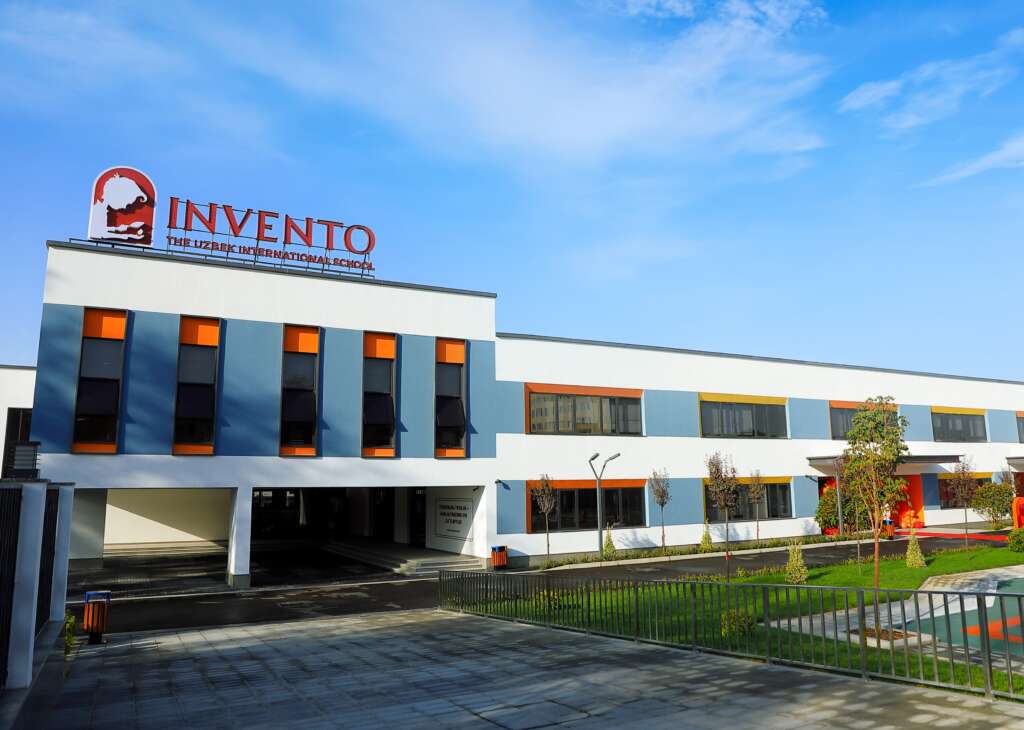
Founded in 2020, Invento, the Uzbek International School, wants to improve the quality of education by harnessing the power of AI. It is an authorised school that offers the full IB pathway, the Primary, Middle Years, and Diploma Programmes.
Students are able to meet rigorous international standards while keeping their national grounding. The school employs 52 teachers from 23 countries to provide an international learning experience, while students from over 20 nationalities study on campus. In June 2026 it joined the Council of International Schools, a recognised marker of quality in international education, and its first graduating class received offers from more than 40 universities worldwide.
The school aims to cultivate strong, independent research skills from an early stage of the schooling experience. Admission to top-tier universities is kept in mind from the start, in step with a shift away from static personal statements toward work that demands real skill.
Access Is Not the Same as Impact
AI is only as effective as the person using it. The biggest lesson from 2026 is, perhaps, that most teachers and schooling systems just aren’t equipped to use it effectively without degrading human skill development. Just 25% of the world’s educators believe they are sufficiently equipped to help students learn with AI.
This point holds across the world, from Tashkent to London. Without adequately trained teachers, AI can do real harm to the skill development of future generations.
The Bottom Line
AI is the defining technology of the present and future, but if used ineffectively, it can create more problems than it solves. Schools that prioritise capacity building and genuine research skills will continue to shine, while others will run into problems that won’t be solved easily.

Prashant Sharma
Prashant Sharma is a Delhi based Entrepreneur who spent most of his college days polishing his marketing skills and went for his first business venture at 19. Having tasted failure in his entrepreneurial debut, he turned a Tech-enthusiast, specializing in web technologies later. Join him on Google Plus