Share This Article
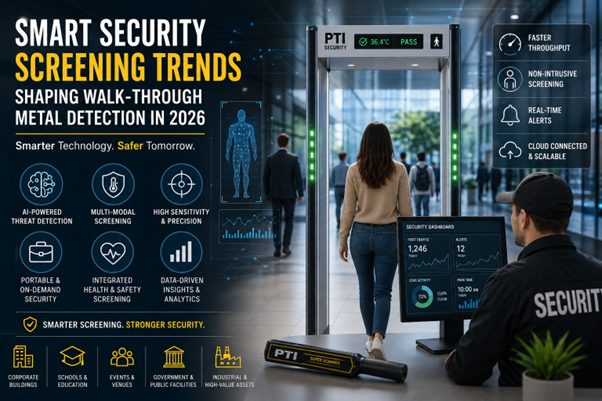
The landscape of security is changing a lot as we move through 2026. What was once a simple process of walking through a metal detector has become a high-tech operation. As cities get more connected and threats get more diverse the need for efficient screening has never been higher. For people in charge of facilities and security, staying ahead means understanding how new technologies are changing what metal detectors can do.
From intelligence to multi-modal sensing the metal detector archway is no longer just a simple sensor. It is the main part of a building’s entry security.
Table of Contents
The Shift Toward -Modal Detection
One big trend this year is moving away from single-purpose hardware. Today’s smart security screening systems often come with sensors that do more than just find weapons. Following the focus on public health and workplace safety we are seeing a big increase in automated temperature screening solutions being added directly to walk-through metal detectors.
By combining security body temperature scanners with metal detectors facilities can screen for physical threats and health issues at the same time. This “one-stop” approach makes entry faster. Prevents long queues often associated with manual health checks.
High-Sensitivity and Material Discrimination
In the past security metal detectors were a problem. They would often have alarms. This happened when people walked through the detectors with things like metal buttons, coins or underwire bras. The alarms would go off. Security guards would have to use hand-held detectors to check people.
Now in 2026 security metal detectors are getting better. They are more precise. New security metal detectors can tell the difference between a keychain and something that is really dangerous. This is very important for security metal detectors in buildings where employees come and go times a day. Security metal detectors are very useful, in these buildings.
Furthermore some sectors like high-end manufacturing and electronics are increasingly using metal detection systems.
These units are calibrated to catch the theft of high-value components proving that metal detection systems are as much about preventing loss as they are about keeping people safe.
Portability and the On-Demand Security Model
The “security-as-a-service” trend has led to a rise in security metal detectors. Not every venue needs a metal detector 365 days a year. For music festivals, political rallies and corporate conferences the ability to rent metal detectors for events has become a necessity.
These modern portable units are designed for deployment. Unlike the heavy frames of the past, today’s metal detector archway systems can often be assembled in minutes without special tools. They offer the level of protection as permanent walk-through detector systems but with the flexibility to be moved as the perimeter of an event changes.
Strengthening Safety in Educational Environments
The conversation around metal detectors for schools has shifted from “if” to “how.” In 2026 the focus for institutions is on “invisible security.” This involves using walk-through metal detectors that are designed to fit in with the school’s architecture to avoid creating a prison- atmosphere.
The goal for school boards is to implement security metal detector archway systems that allow students to move through quickly. With hundreds of students arriving at the time the technology must be fast and reliable. When an alert does occur staff can quickly use hand-held metal detectors to resolve the issue efficiently minimizing disruption to the school day.
The Role of Intelligent Hardware: PTI Metal Detectors
As the market grows the distinction between consumer-grade and industrial-grade hardware becomes clearer. Systems like PTI metal detectors are leading the way by offering units that’re not only durable but also meet the latest international security standards.
Reliability is the critical trend in 2026. A walk-through detector that experiences downtime is more than just an inconvenience; it is a liability. Modern metal detector security gates are now built with self- software that alerts maintenance teams before a component fails ensuring the security gate is always working.
Enhancing User Experience with Non-Intrusive Screening
One of the trends shaping the industry is the focus on the “human element.” High-traffic venues like airports and stadiums are moving toward walk-through detector systems that allow people to keep their phones and wallets in their pockets. By using -zone detection the machine can tell the operator exactly where the metal is located.
If the security metal detector archway indicates an object at the ankle level the guard knows where to check with their hand metal detector. This targeted approach is much faster than a full-body search. Significantly improves the overall experience for the visitor.
The overarching theme for 2026 is the integration of detection into the digital ecosystem of the building. We are moving toward a future where a walk-through metal detector is connected to the cloud providing real-time data on foot traffic, alarm rates and peak entry times.
Whether it is through the use of portable security metal detectors for an exhibit or the installation of permanent metal detectors for buildings the technology is becoming smarter, faster and more discreet. As we continue to navigate a global landscape the reliance on advanced metal detection systems will only grow, ensuring that our public and private spaces remain safe, secure and open, for business.