Share This Article
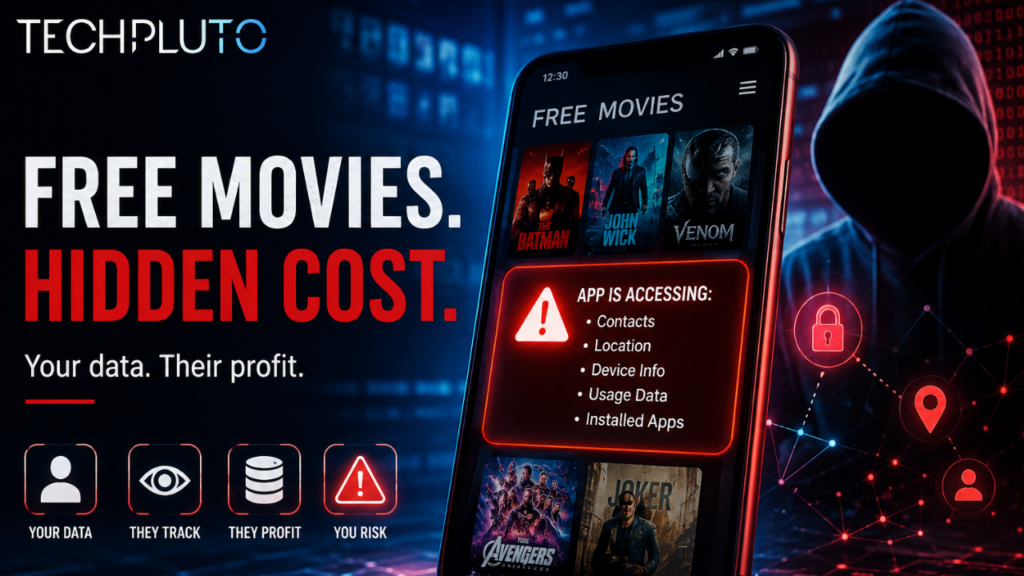
Free movie apps continue to dominate conversations in Telegram channels, Reddit threads, and private WhatsApp groups. Every quarter, a fresh wave hits — CineBox, Thunder TV, HD Streamz clones, or whatever the latest rebranded APK is called. They promise unlimited 4K movies, latest series, zero ads, zero subscriptions, and zero registration. For casual users chasing the newest blockbuster, free movie apps feel like a jackpot. For cybersecurity experts, privacy researchers, and reverse engineers, they represent a textbook case of modern surveillance disguised as entertainment.
Free movie apps are rarely built purely for piracy altruism. The infrastructure required — massive storage, high-bandwidth CDNs, transcoding servers, frequent updates, and global delivery — costs serious money. Yet these free movie apps deliver everything at no visible cost to the user. This economic puzzle is where the real story begins. In 2026, data has become far more valuable than subscription fees. A rich behavioral profile from free movie apps can be sold repeatedly across advertising networks, data brokers, and underground markets.
The shift in piracy economics is clear. Traditional piracy was about avoiding payments. Today, free movie apps turn users into the product. Detailed insights into what you watch, when you watch, your device fingerprint, location patterns, and even app usage habits create long-term revenue streams that dwarf one-time subscription income. This is why free movie apps keep proliferating despite obvious risks.
Table of Contents
The Business Model Behind Free Movie Apps
Running a true streaming platform is expensive. Legitimate services spend billions licensing content and maintaining servers. Free movie apps, however, skip licensing entirely by relying on pirated sources while focusing their real investment on data collection infrastructure.
Many free movie apps show no visible ads, no premium tiers, and no obvious revenue. This absence is deliberate. The monetization happens silently through data harvesting. One detailed user profile can generate revenue hundreds of times via behavioral analytics, audience segmentation, retargeting, and data brokerage. Cybersecurity firms estimate that the underground data market from such free movie apps exceeds several billion dollars annually.
Technical Deep Dive: What Security Researchers Find in Free Movie Apps
When experts decompile popular free movie apps, consistent dangerous patterns emerge. Most APKs are heavily obfuscated using tools like ProGuard, DexGuard, or custom packers. Dynamic code loading allows payloads to update after installation, evading initial scans.
Key red flags in free movie apps:
- Over-privileged manifests requesting READ_SMS, READ_CALL_LOG, READ_CONTACTS, and ACCESSIBILITY_SERVICE.
- Aggressive background services that survive battery optimizations.
- Multiple third-party SDKs (often 15–30) for analytics, ad fraud, and fingerprinting.
- Hardcoded C2 domains and encrypted communication channels disguised as media traffic.
Free movie apps frequently abuse Accessibility Services to achieve keylogging, screen recording, and auto-permission granting. Network monitoring shows exfiltration of device fingerprints, installed app lists, Wi-Fi credentials, and location data. Some free movie apps even implement invisible ad fraud — generating fake clicks and impressions in the background without user awareness.
Real-World Malware Campaigns Using Free Movie Apps (2025–2026)
In 2025–2026, threat intelligence reports documented a surge in malware distributed via free movie apps. Variants of banking trojans (Alien, Coper, and new strains) were bundled with popular streaming APKs on Telegram. Users installing free movie apps unknowingly received credential stealers targeting banking and crypto apps.
Specific cases involving free movie apps include:
- CineBox and clones exfiltrating Google account tokens.
- Pre-infected Android TV boxes with persistent IoT backdoors.
- Participation in large-scale ad fraud botnets.
- Lateral network movement attempts after gaining initial foothold.
The evolution of BADBOX-style botnets now heavily leverages free movie apps on Smart TVs and Fire Sticks. These devices remain online for years with minimal updates, making them ideal long-term assets for attackers.
AI has accelerated the threat. Operators now generate polished UIs, fake privacy policies, and convincing marketing campaigns within hours. This professional appearance makes free movie apps far more dangerous than obvious scam apps of the past.
Hidden Tracking Mechanisms Used by Free Movie Apps
Modern free movie apps employ advanced tracking far beyond basic analytics:
- Canvas, WebGL, and audio fingerprinting for unique device identification.
- Sensor data profiling (accelerometer, gyroscope, battery stats).
- Cross-app tracking via advertising IDs and clipboard monitoring.
- Zero-permission location inference through Wi-Fi and IP data.
- Behavioral biometrics — how you scroll, tap, and watch content.
All this data feeds centralized dashboards. Operators can sell access or use it for larger phishing, fraud, or surveillance campaigns. The invisible supply chain of SDKs makes it nearly impossible for users to know who ultimately receives their information.
Why Free Movie Apps Keep Going Viral
Free movie apps succeed because they exploit fundamental human psychology. The desire for instant gratification, fear of missing out on new releases, and social proof from group shares override caution. Most users never ask the critical questions: Who built this APK? How does it stay free? Why does it need these permissions?
This cycle repeats every few months. A new free movie app gains traction, harvests data aggressively for weeks, then fades or rebrands when detection increases. Users simply move to the next viral APK.
Expert Mitigation Strategies Against Risky Free Movie Apps
Security professionals analyzing free movie apps should follow this hardened workflow:
- Isolated analysis devices or virtual emulators with network segmentation.
- Static analysis using MobSF, APKTool, and JADX.
- Dynamic instrumentation with Frida and Objection.
- Full traffic interception via Burp Suite or mitmproxy.
- Runtime permission monitoring and behavioral baselining.
For general users, the best advice is simple: avoid sideloaded free movie apps. Use official platforms with strong security reputations. Consider self-hosted solutions like Jellyfin or Plex with legal media sources for better control and privacy.
Additional protections include always-on VPNs, DNS-level blocking (NextDNS/AdGuard), and regular device audits for suspicious background activity.
The Bigger Picture: Surveillance Capitalism and Free Movie Apps
Free movie apps are a symptom of larger internet incentives. Attention is currency. Data is the new oil. Entertainment serves as the perfect bait to extract intimate user profiles. Unlike regulated apps, free movie apps operate in legal gray zones with minimal accountability.
This creates a dangerous asymmetry. Users believe they receive something for nothing. In reality, they pay with long-term privacy erosion, increased malware exposure, and potential identity risks.
Final Thoughts on Free Movie Apps in 2026
Are free movie apps safe? For the vast majority, the answer is a clear no. The combination of sophisticated data harvesting, hidden tracking, ad fraud, and malware delivery makes them high-risk propositions.
The smarter questions to ask before installing any free movie app are:
- How does this app actually make money?
- What data is it collecting and where is it sent?
- Is the short-term convenience worth the long-term exposure?
Until users demand transparency and developers face real consequences, the cycle of viral free movie apps will continue. The movie might look free — but your data and digital security almost never are.