Share This Article
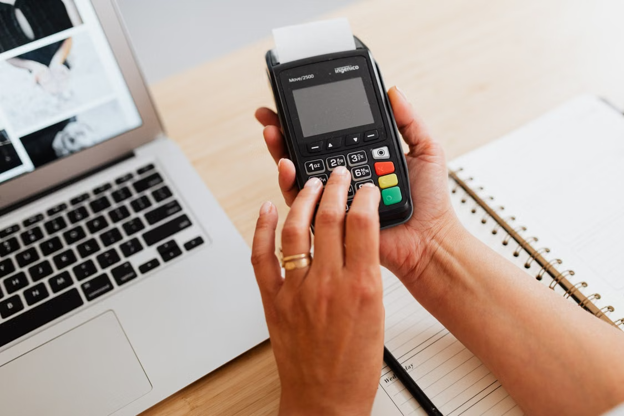
It is the Thursday before Mother’s Day, and the phone at your flower shop has rung 40 times since you unlocked the door. Customers are lined up at the counter, and three callers on hold want bouquets delivered across town on Sunday. Each wants to pay by card before hanging up. The only card reader in the building is at the front counter, where an employee is processing walk-in sales as quickly as the receipt printer allows.
Table of Contents
Seasonal Demand in Recent Figures
The National Retail Federation reported that US holiday sales from November 1 through December 31, 2025, grew 4.1% from a year earlier and surpassed $1 trillion. A late Thanksgiving pushed Cyber Monday into December that year, adding one of the season’s largest online shopping days to the final month.
The federation also projected a record $38 billion in Mother’s Day spending for 2026, with 75% of shoppers planning to buy flowers and approximately $3.2 billion expected to go toward flowers alone. Planned spending per person reached a record $284.25, up from $259.04 the previous year, while approximately 84% of US adults said they planned to celebrate.
American Express estimated that consumers spent $18 billion at small retailers and restaurants on Small Business Saturday in 2025, below its $22 billion estimate for 2024. In its 2025 Shop Small Impact Study, 86% of consumers said they were likely to shop at small businesses during the holiday season.
Phone Orders Away From the Checkout
When one employee is processing walk-in customers, phone orders have to wait until the checkout is free, or callers may be asked to visit the shop in person. A second employee with a laptop in the back room can take those calls simultaneously, entering payments through a browser-based form while the counter continues serving customers.
A shop that already has a card reader can add a virtual terminal for phone orders. Walk-in sales continue through the reader, while phone and email orders are processed through the browser form. Both can feed into the same daily deposit.
A gift shop shipping December orders to out-of-state relatives and a florist booking Valentine’s Day deliveries can use this approach because the order and payment are handled during the same interaction.
A bakery can use a virtual terminal merchant account to collect a deposit when a Thanksgiving pie order is placed and charge the remaining balance at pickup. This can reduce losses from customers who fail to collect their orders, while allowing the business to receive the deposit before its busiest week begins.
Order Records for Delivery Days
A virtual terminal sale usually includes a description or notes field. During a busy period, staff can record the delivery address, requested date, and card message while taking the order. At the end of the day, the sales report can also serve as a delivery list, organised by time and amount. Drivers can then work from the same records associated with the customer’s payment.
A florist who records orders on paper slips during a rush has two sets of records to reconcile. Paper slips can also go missing, potentially causing an order to be overlooked.
Order records can also be useful when a customer later disputes a transaction. In cases of friendly fraud, where a customer disputes a legitimate purchase, notes identifying the recipient, delivery address, and delivery time may help the business document the transaction. Delivery confirmations and signatures can provide additional evidence when a payment dispute arises.
Seasonal Staff and Access Levels
The National Retail Federation expected retailers to hire between 265,000 and 365,000 seasonal workers for the 2025 holidays, compared with 442,000 seasonal hires in 2024.
A small shop that brings in temporary staff may need those employees to process phone payments. New staff should verify the card number and transaction amount with the customer before submitting a payment. This helps reduce errors that can lead to declined transactions and additional calls.
Many virtual terminals allow business owners to set permissions for individual users. A temporary employee might be permitted to process sales but restricted from issuing refunds or voiding transactions. These controls can reduce opportunities for unauthorised activity.
Employee theft can be particularly costly for small businesses. In one reported case, a project manager took $156,000, a loss that would require more than $3 million in additional sales to recover at a 5% profit margin.
Temporary accounts should also have a clear end date. Disabling access on an employee’s final working day helps prevent former staff from retaining access after the seasonal rush ends.
Fraud Checks During Peak Volume
TransUnion found that 4.2% of attempted online transactions involving US consumers between Thanksgiving and Cyber Monday 2024 were suspected fraud, down from 5.8% during the same period in 2023.
Phone orders can also be vulnerable to fraud because a caller using stolen card details may sound like any other customer. In December 2024, police in Columbus, Georgia, warned that callers were purchasing goods from local shops using stolen card numbers and collecting them with counterfeit identification. The scam had cost some business owners thousands of dollars.
For keyed transactions, the address verification service (AVS) compares the billing address details entered during checkout with the card issuer’s records. The card verification value (CVV) check validates the security code associated with the card.
A transaction may still be approved even if the address verification check fails. Businesses should therefore establish clear procedures for handling mismatches. For example, a large order with inconsistent billing details could trigger a callback to a phone number already on file rather than one supplied during the suspicious transaction.
Deposit Timing and Later Disputes
Card sales usually reach a business’s bank account within one to five business days, depending on the payment provider’s funding schedule. Timing matters during seasonal peaks, when inventory bills may arrive before revenue is available.
Some providers offer next-day or same-day funding for an additional fee. A business may choose to use faster funding during particularly busy weeks, provided the service is available and the cost makes financial sense.
Payment providers may also set processing limits for individual accounts. A sudden increase in transaction volume during the holidays could trigger a risk review. Requesting a higher limit before seasonal orders begin gives the provider time to assess the account before demand peaks.
Cardholders can dispute transactions under applicable card-network and issuer rules. A December purchase may therefore lead to a chargeback weeks or months later. Businesses should retain order records, delivery confirmations, and relevant transaction details so they can respond to disputes with supporting evidence.
The Cost of a Missed Holiday Order
A busy signal or a caller who is told to visit the shop in person may mean a sale goes to a competitor. This can be particularly costly during seasonal peaks, when demand is concentrated into a short period.
For florists and bakeries, missed orders during Mother’s Day, Valentine’s Day, or the winter holidays may be difficult to recover because the occasion cannot simply be rescheduled. Customers who order elsewhere may also choose a different supplier the following year.
A virtual terminal can help small businesses accept card payments away from the physical checkout, allowing staff to handle phone orders while continuing to serve walk-in customers. Combined with accurate order records, sensible staff permissions, and appropriate fraud checks, it can make busy sales periods easier to manage.